


- In a tense White House meeting, Trump accused Zelenskyy of being "disrespectful," canceled a minerals deal, and warned against "gambling with World War III."
- European leaders backed Ukraine, while Russia praised Trump's stance. U.S. reactions were split, with Democrats criticizing Trump and some Republicans supporting his approach.
- The confrontation strained U.S.-Ukraine relations, raising concerns over future military aid and the stability of Western alliances in the ongoing conflict.
In a contentious meeting at the White House on February 28, 2025, U.S. President Donald Trump and Ukrainian President Volodymyr Zelenskyy clashed openly, leading to a diplomatic fallout that has sent shockwaves through international relations.
Originally the meeting was intended to discuss a minerals-sharing agreement and U.S. support for Ukraine amidst its ongoing conflict with Russia; however, the meeting rapidly deteriorated.
President Trump accused Zelenskyy of being "disrespectful" and warned him about "gambling with World War III." Vice President JD Vance echoed these sentiments, criticizing Zelenskyy for a perceived lack of gratitude for U.S. assistance.
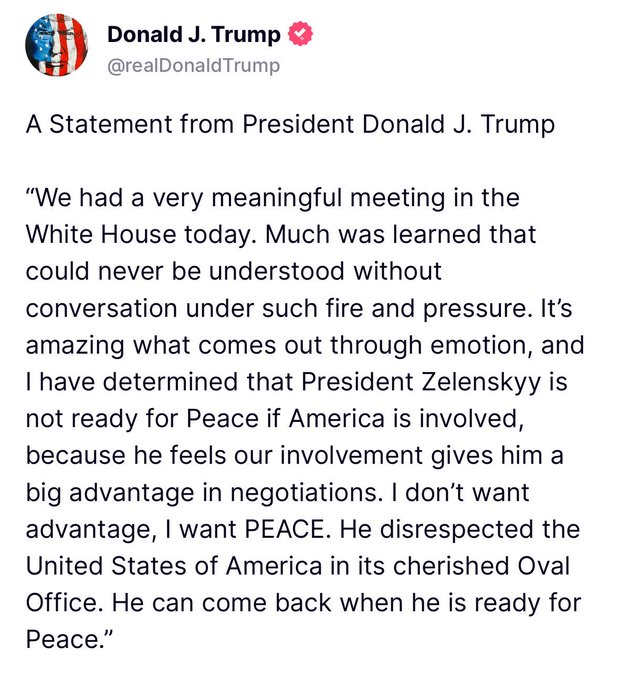
The confrontation culminated with Trump abruptly calling off the proposed minerals deal, instructing Zelenskyy to return "when he is ready for peace."
Russian officials and state media expressed satisfaction with the outcome. Maria Zakharova, Russia's Foreign Ministry spokeswoman, noted Trump's "restraint" during the exchange, while Dmitry Medvedev, deputy head of Russia's Security Council, labeled Zelenskyy an "insolent pig" who received a "proper slap down in the Oval Office."
The abrupt and public nature of the confrontation has strained U.S.-Ukraine relations. The collapse of the minerals deal and the potential reevaluation of U.S. military aid to Ukraine introduce uncertainty into the future of the bilateral partnership.
The Oval Office clash between Presidents Trump and Zelenskyy marks a significant moment in international diplomacy, revealing deep divisions in approaches to the Russia-Ukraine conflict.
Edited by Harshajit Sarmah


