


The promise of Web3 was supposed to be a decentralised, democratised digital frontier where innovation would flourish regardless of background, gender, or geography.
Yet, as we stand at the midpoint of 2025, the harsh reality paints a starkly different picture.
Despite the transformative potential of blockchain technology, women remain dramatically underrepresented in Africa's Web3 ecosystem.
They're echoing global patterns that reveal systemic barriers to female participation in one of the most rapidly evolving sectors of our digital economy.
The Stark Reality of Funding Disparities
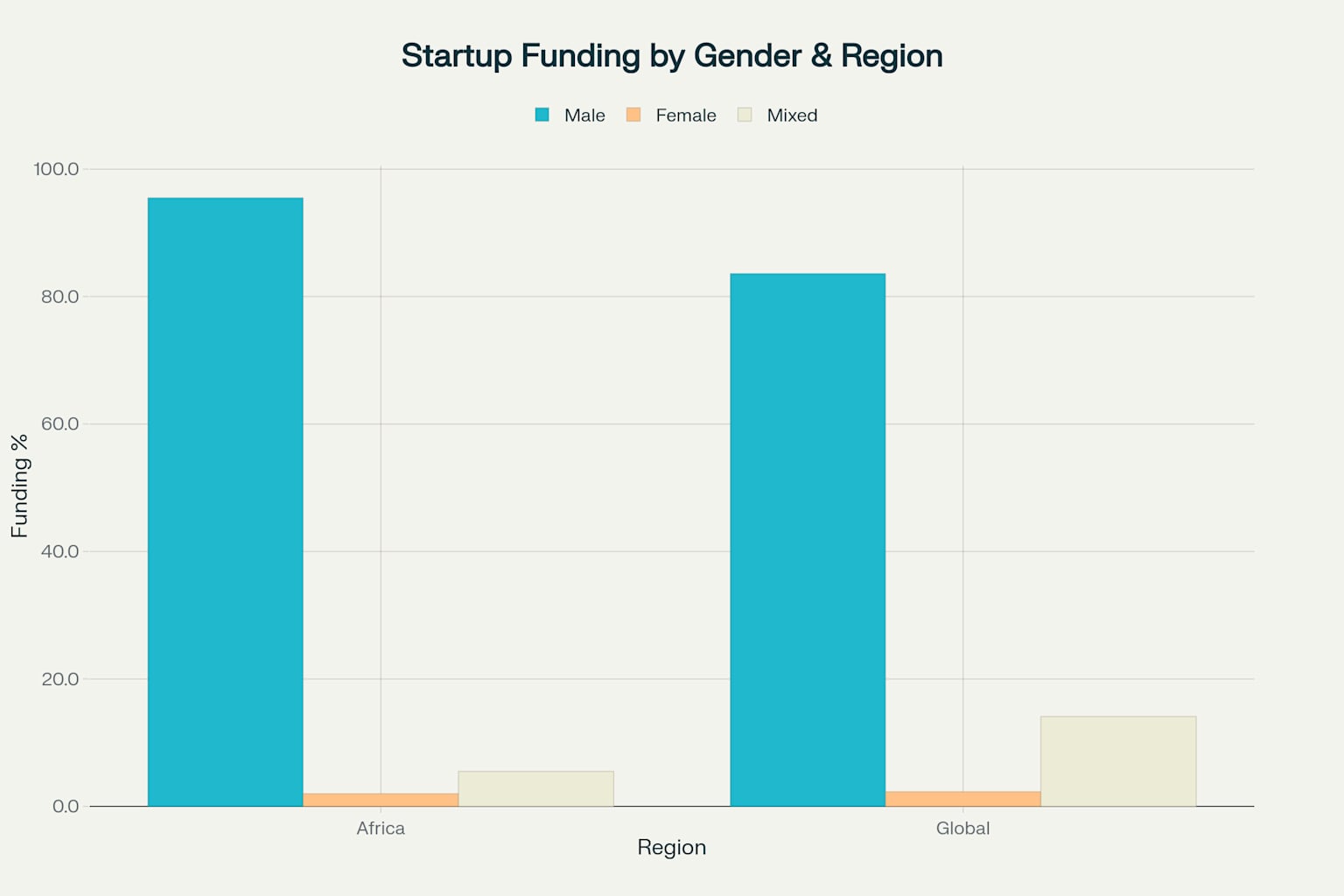
The numbers tell a devastating story. In 2024, female-led startups in Africa received merely 2% of total startup funding: a figure that represents a five-year low and a dramatic decline from previous years.
This disparity becomes even more pronounced when examined through the lens of actual capital: female CEOs in Africa raised only $48 million compared to $2.2 billion secured by their male counterparts.
These statistics represent dreams deferred, innovations unrealised, and a continent's untapped potential.
When we consider that women constitute over half of Africa's population and are increasingly recognised as drivers of economic growth, the magnitude of this missed opportunity becomes staggering.
The funding gap extends beyond simple financial metrics since it reflects deeper structural inequalities that permeate the entire Web3 ecosystem.
Africa's Unique Position in the Web3 Landscape
Africa has emerged as a global leader in blockchain adoption, with the continent experiencing a remarkable 1,200% increase in cryptocurrency payments between 2020 and 2021.
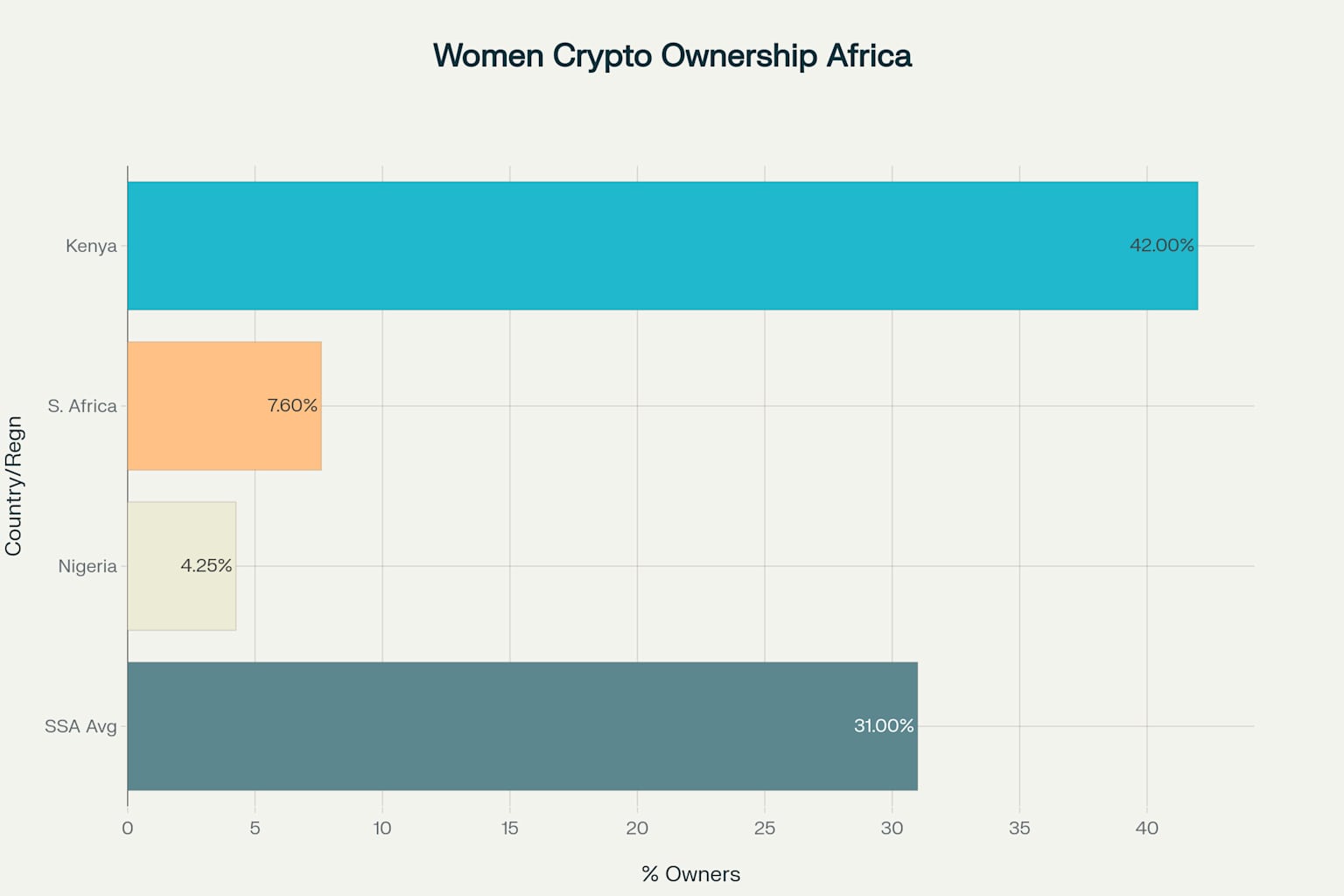
The cryptocurrency ownership landscape across Africa reveals fascinating regional variations.
Kenya stands out dramatically, with women comprising 42% of crypto owners, ranking third globally and first in Africa for crypto gender equality.
The Banking Crisis That Web3 Could Solve
The underlying drivers of women's Web3 adoption in Africa are deeply rooted in systemic financial exclusion. Only 37% of women in sub-Saharan Africa have access to bank accounts, compared to 48% of men—a gap that has widened over recent years.
This financial apartheid creates the perfect conditions for blockchain adoption, as Web3 technologies offer pathways to financial inclusion that bypass traditional banking infrastructure.
For women entrepreneurs seeking to build international businesses or send remittances, the costs are surely prohibitive.
Blockchain-based solutions offer transaction fees that are often a fraction of traditional alternatives, creating immediate economic incentives for adoption.
While blockchain-based digital identity solutions could theoretically solve this problem, the technical knowledge and resources required to implement these solutions remain concentrated among male-dominated networks.
The Innovation Imperative
In the African context, where women represent the majority of informal economy participants and are often the primary managers of household finances, their absence from Web3 development creates a critical blind spot.
Consider the success stories that have emerged despite these barriers. Sarah Idahosa, founder of Women in DeFi, has built a community of over 3,000 trained women across Africa, demonstrating the untapped demand for Web3 education and participation.
Similarly, initiatives like Web3 Ladies, which has partnered with Polygon to onboard over 100,000 African women to blockchain technology, reveal the scalability potential when proper resources are directed toward inclusion.
Initiatives and Solutions
Despite the challenges, 2025 has witnessed remarkable initiatives aimed at closing the gender gap in African Web3. The Women in DeFi Summit 2025, held in Lagos in April, represented a historic milestone in bringing together the continent's leading female blockchain innovators.
Themed "Building Bridges: Connecting Women, Inspiring Innovation," the summit demonstrated the growing momentum behind female inclusion in the sector.
The scale of educational initiatives is impressive. Unstoppable Women of Web3's commitment to providing Web3 and metaverse education for 6 million African women over five years represents one of the most ambitious diversity initiatives in the tech sector.
The program's partnership with 19+ companies, including major players like Polygon Labs, Chipper Cash, and Unstoppable Domains, signals a serious institutional commitment to change.
BitGet's partnership with UNICEF has delivered gamified STEM and Web3 modules to 300,000 African girls, demonstrating that large-scale impact is possible when proper resources are allocated.
The Bitcoin DADA Cohort 9 program, specifically designed to bridge the gender gap in crypto education, reports that educated women boost their earnings by 20% after completing the program.
The Technical Evolution and Its Implications
The technical evolution of Web3 infrastructure in 2025 has created new opportunities for African women entrepreneurs. Layer-2 scaling solutions have dramatically reduced transaction costs, making blockchain interactions practical for everyday use.
This technical progress particularly benefits women in the informal economy, who often work with smaller transaction volumes where high fees previously made blockchain solutions unviable.
Decentralised identity (DID) solutions are addressing the identification challenges that have historically excluded women from financial services.
With over 500 million Africans lacking proper identification, blockchain-based credential systems offer pathways to digital participation that bypass traditional bureaucratic barriers.
Barriers That Persist & The Economic Imperative
Despite progress, fundamental barriers limit women's Web3 participation. Many programs focus on basic cryptocurrency education rather than technical skills needed to build blockchain companies.
While initiatives like Web3 Ladies and Women in DeFi provide training, sustained entrepreneurship support remains lacking.
Network access is the most challenging barrier. Male-dominated informal networks drive venture capital decisions and partnerships. Even when women develop expertise and prototypes, scaling depends on network access.
Risk perception challenges persist. Traditional gender biases influence funding decisions, with investors viewing female-led teams as higher risk despite evidence of better returns. In volatile Web3, technical complexity amplifies these biases.
Conclusion
Africa stands at a pivotal moment for Web3, with high blockchain adoption, a young digital population, and urgent inclusion needs. But true progress requires overcoming women’s exclusion.
Initiatives like Women in DeFi and large-scale education programs show promise, but must scale faster. If African women remain sidelined, Web3 risks repeating old inequalities.
Investors, educators, and leaders must act now: fund female founders, foster entrepreneurship, and mentor new talent.
Only by including women can Web3 fulfil its promise as a force for liberation, not exclusion. The choices made in 2025 will shape whether Africa’s Web3 future is truly open and fair.
Edited by Annette George


