


The crypto universe in 2025 is a sprawling, fast-evolving market, where the distinctions between coins, tokens, and the broader Web3 ecosystem are academic & central to both investment strategy and regulatory survival.
With over 37 million cryptocurrencies in existence and regulatory frameworks finally catching up, understanding the nuances between coins and tokens is more of a risk, opportunity, and compliance.

In the current industry context, the term "crypto" is used to describe all digital assets that leverage blockchain technology, including both coins and tokens.
Coins vs. Tokens
At the core, the difference is structural:
- Coins are digital assets that run on their independent blockchains. Think of Bitcoin (BTC), Ethereum (ETH), and Solana (SOL): each has its ledger, consensus mechanism, and network infrastructure.
Coins are typically used as a medium of exchange, a store of value, or to pay network fees. - Tokens are digital assets created atop existing blockchains: most commonly Ethereum (via ERC-20 or ERC-721 standards), Solana, or Binance Smart Chain.
Tokens do not have a native blockchain; instead, they leverage the security and infrastructure of another chain.
Their functions are broader - they can represent utility (access to a service), governance (voting rights), or even fractionalized ownership of real-world assets.

This matters because the underlying architecture determines everything from security and decentralisation to regulatory classification and investment risk.
Functional Differences
Coins, especially those underpinning major blockchains, are foundational to the Web3 vision. They secure networks, process transactions, and often serve as the backbone for entire ecosystems.
Tokens, meanwhile, are the lifeblood of decentralised applications (dApps), DeFi protocols, and new models of digital ownership and governance.
Key Token Types:
- Utility Tokens: Grant access to a product or service (Filecoin’s FIL for storage).
- Governance Tokens: Allow holders to vote on protocol changes (Uniswap’s UNI).
- Security Tokens: Represent investment contracts and are subject to securities laws.
- Asset-Backed Tokens: Represent ownership in real-world assets (tokenised real estate).
2025: The Regulatory Reckoning
The most pivotal development for investors in 2025 is the clarity brought by global regulators, especially the U.S. SEC.
The new guidance draws a sharper line: tokens marketed with profit expectations and centralised control are likely to be classified as securities. This means tougher compliance, fewer speculative launches, and a flight to quality.
“If token buyers expect profits based primarily on the efforts of a centralized team or promoter, the token is likely a security.”
For investors, this is a double-edged sword:
- Fewer tokens may be available on major exchanges as platforms delist or restrict access to assets flagged as securities.
- Markets may become safer and less scam-prone, as regulatory oversight weeds out dubious projects.
- Tokens with genuine utility and decentralisation will thrive, while profit-centric, centrally-controlled tokens face existential risk.
Web3 and the Token Explosion
The Web3 movement, decentralised, user-owned, and interoperable, has fueled an explosion in token creation.
As of July 2025, there are over 37 million tokens, with projections to hit 100 million by year’s end.
This growth is driven by:
- Ease of token creation (thanks to platforms like Ethereum and Solana).
- Tokenisation of real-world assets (RWA), enabling fractional ownership and liquidity in previously illiquid markets.
- Interoperability protocols that allow tokens to move across chains, enhancing utility and composability.
But with this abundance comes a new challenge: signal vs. noise.
Most tokens will fail; only those with real utility, strong governance, and compliance will endure.
Market Realities: 2025 Data Snapshot
Here’s how the top cryptocurrencies stack up in 2025, underscoring the dominance of foundational coins:
| Coin | Market Cap (USD) | Use Case |
|---|---|---|
| Bitcoin | $2.11 trillion | Digital gold, payments |
| Ethereum | $294.64 billion | Smart contracts, dApps |
| BNB | $91.66 billion | Exchange utility |
| Solana | $79.06 billion | High-speed dApps |
| XRP | $129.10 billion | Payments, settlements |
| Dogecoin | $24 billion | Meme, payments |
| Cardano | $19.49 billion | Smart contracts |
| Avalanche | $7.33 billion | DeFi, dApps |
| Shiba Inu | $6.60 billion | Meme, community |
| Polkadot | $5.28 billion | Interoperability |
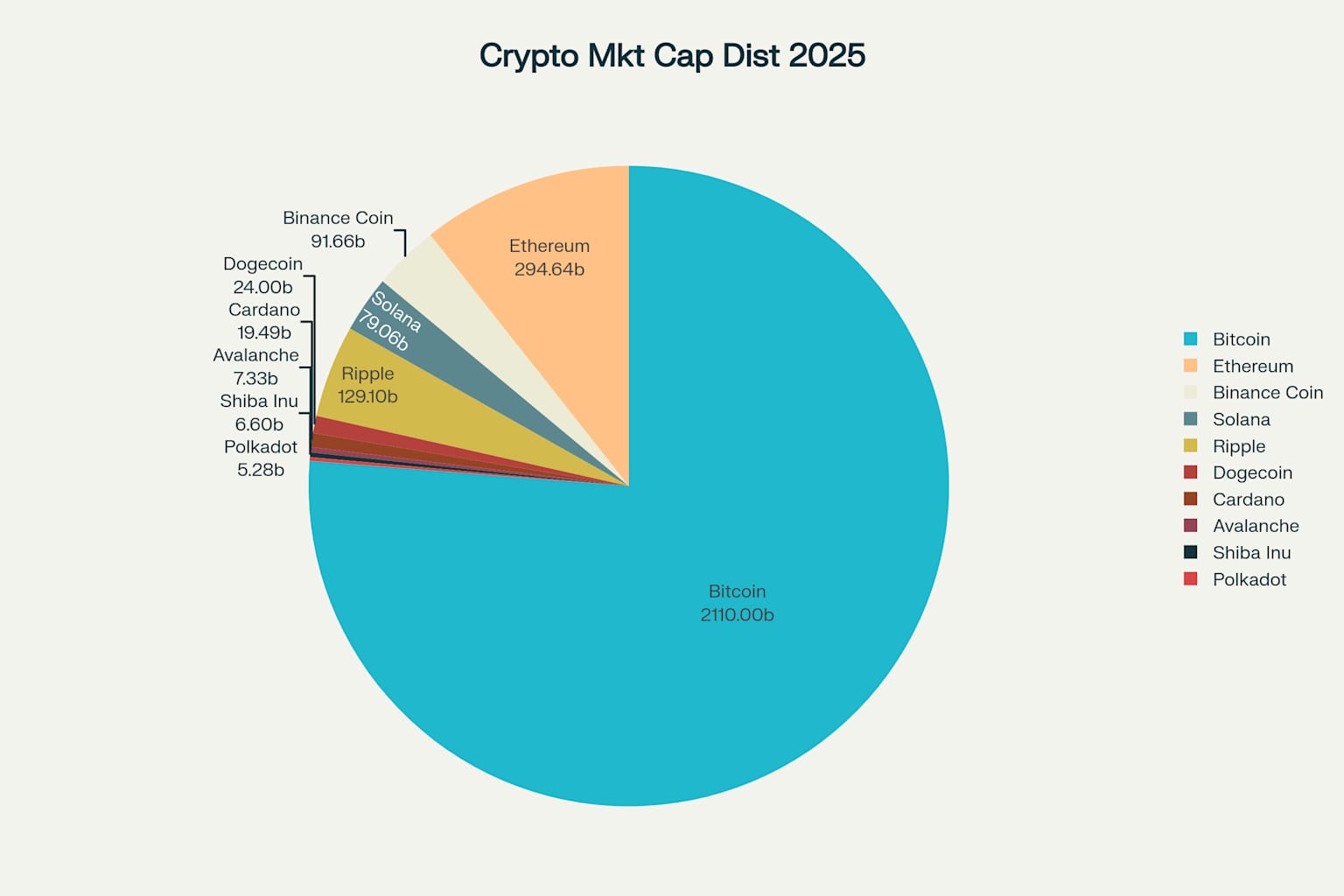
Bitcoin remains dominant, but the ecosystem is increasingly diversified.
Investor Takeaways: Why This Distinction Matters
- Risk and Regulation: Coins are usually less exposed to securities regulation; tokens, especially those with profit promises, face strict scrutiny.
- Utility and Longevity: Coins like BTC and ETH are foundational, with proven resilience. Tokens must prove ongoing utility and decentralisation to survive.
- Diversification and Due Diligence: With millions of tokens, investors must scrutinise the tech along with the legal and governance structure of each asset.
- Web3’s Promise and Pitfalls: The future is decentralised, but not every token is a ticket to that future. Regulatory clarity and technological innovation will separate the lasting from the fleeting.
In 2025, the difference between coins and tokens is an axis on which the entire crypto investment world turns.
For those willing to do the work, the rewards are real. For the complacent, the risks have never been greater. Choose wisely, and invest with eyes wide open.
Edited by Annette George


