


If you’ve spent any time in the Web3 trenches lately, you’ve probably heard the phrase “Zero-Knowledge” (ZK) more often than you hear “gm” in a Discord server.
ZK is everywhere: in pitch decks, on-chain protocols, and, if you listen closely, maybe even whispered by your local blockchain barista.
But are we truly on the cusp of a cryptographic revolution, or is this just another tech bubble inflating faster than a meme coin on launch day?
The ZK Boom: Fact or FOMO?
Zero-Knowledge Proofs (ZKPs) have been around since the 1980s, but only in the past two years have they gone from a cryptographers’ plaything to Web3’s hottest ticket.
Consensus 2025 was abuzz with ZK rollups, privacy protocols, and layer-2 scaling solutions, all promising to make blockchain as private and scalable as your favourite centralised app, without the “trust me bro”.
But is this sudden surge justified? The numbers indicate a significant increase in both adoption and performance.
Experts predict ZKP technology will see a 10x to 100x improvement in proof performance by the end of this year, making real-time applications from DeFi to gaming practical at last.
Developer tools are catching up, too, lowering the barrier for new projects to jump on the ZK bandwagon.
ZK’s Meteoric Rise
In 2023, ZK adoption was a niche affair. By 2025, it will be mainstream, with Google Wallet, Cloudflare, and even DeFi giants like zkSync and StarkNet rolling out ZK-powered features in production environments.
The chart below illustrates the steep trajectory of ZK adoption and performance over the past three years.
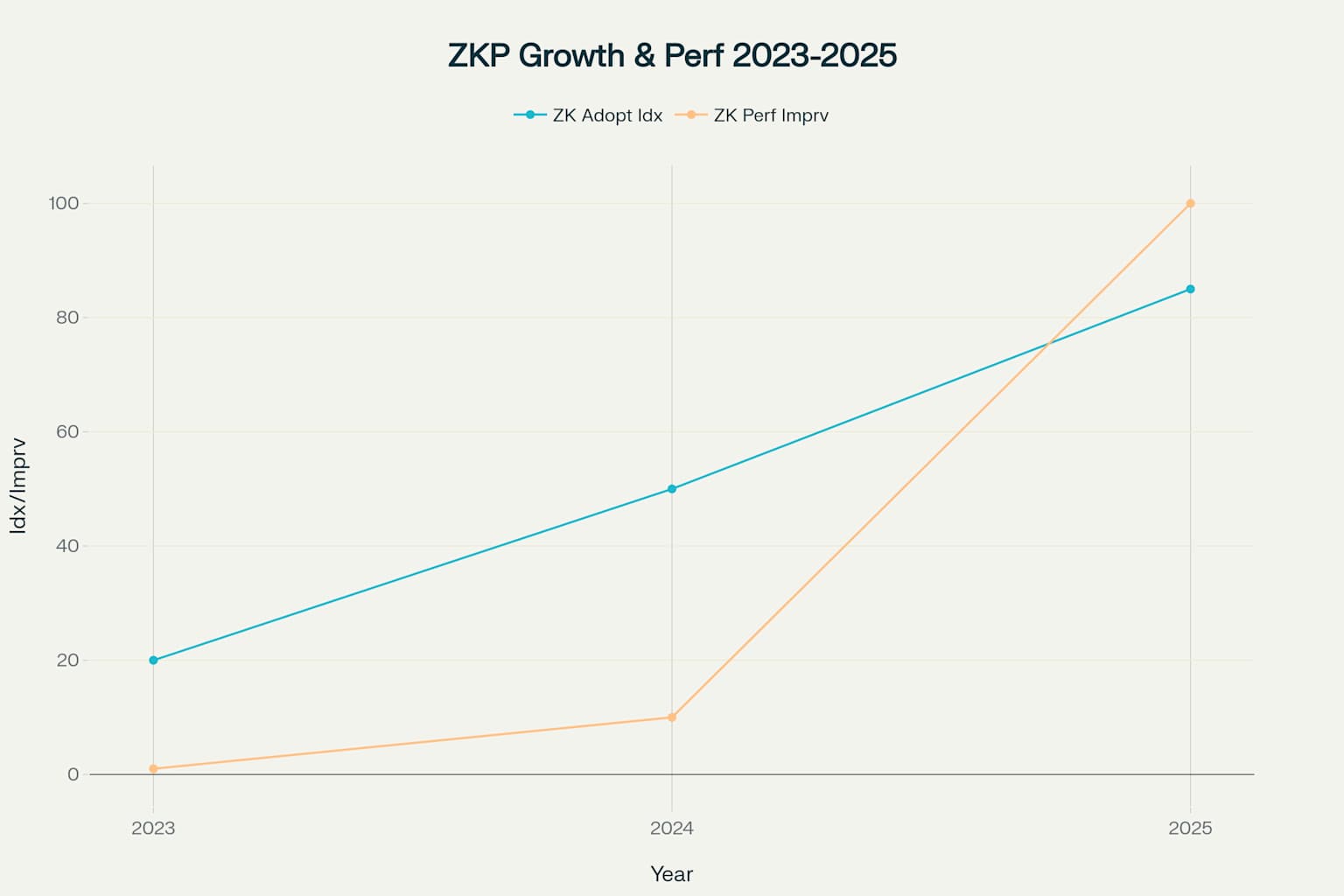
Growth and Performance Improvement of Zero-Knowledge Proofs (2023-2025)
ZK rollups now underpin a significant share of Ethereum’s layer-2 transaction volume, and ZK-related tokens are among the most volatile and lucrative assets on the market.
At Consensus 2025, industry leaders highlighted that ZK protocols are attracting substantial liquidity, with traders and VCs alike piling in.
Even the Nasdaq is feeling the ripple effect, as tech stocks with ZK exposure see outsized gains.
The Bubble Question: Is ZK Overhyped?
Let’s address the elephant in the room: Are we in a ZK bubble? The answer is nuanced.
Signs of a Bubble
- Speculative Frenzy: ZK tokens have seen wild price swings, with some projects posting gains that make meme coins blush.
The classic signs of speculative excess: FOMO-driven investments, vaporware projects, and promises of “unlimited scalability” - are all present. - Hype Outpacing Reality: While ZK tech is improving rapidly, some projects are more sizzle than steak. Startups “ZK everything” without a clear path to production, and the market is rewarding them handsomely, at least for now.
Signs of Real Value
- Tangible Adoption: Unlike the ICO bubble of 2017, ZK is being used. Major enterprises and infrastructure providers are shipping ZK-powered features, and the technology is moving beyond crypto into sectors like digital identity, supply chain, and even cloud computing.
- Regulatory Momentum: The U.S. National Institute of Standards and Technology (NIST) is set to standardise ZKPs by the end of 2025, paving the way for broader enterprise and government adoption.
What’s Driving the ZK Craze?
- Privacy and Compliance: With GDPR, CCPA, and a global push for data privacy, ZKPs offer a way to prove things without revealing sensitive information - think KYC checks, credit scores, or medical records, all without doxxing yourself.
- Scalability: ZK rollups allow thousands of transactions to be bundled and verified off-chain, then settled on-chain, reducing costs and congestion. Ethereum’s roadmap is now inseparable from ZK scaling solutions.
- Interoperability: As Web3 matures, cross-chain communication is a must. ZKPs are enabling seamless, trustless bridges between blockchains, making the “multi-chain future” more than just a slogan.
Bubble or Building Block?
Is ZK the next dot-com bubble, or is it the TCP/IP of the decentralised era? The answer is: a bit of both.
There’s froth - no doubt. But beneath the surface, there’s real innovation, real adoption, and a regulatory tailwind that suggests ZK is here to stay.
If you’re a builder, now’s the time to get your hands dirty with ZK frameworks - don’t buy every “ZK-powered” token that crosses your feed.
If you’re an investor, remember: bubbles burst, but the best tech always survives the pop.
Edited by Annette George


