


The conversation around blockchain in Africa has explicitly shifted. Today, a new generation of African fintech companies is changing payment infrastructure through sophisticated blockchain implementations that prioritise regulatory compliance, operational efficiency, and utility over token speculation.
This transformation is a strategic repositioning of blockchain as critical financial infrastructure.
Nigerian companies, such as Zone, which processed over NGN 1 trillion in blockchain transactions between November 2022 and December 2024, exemplify this pragmatic approach.
Their success with Hyperledger Fabric-powered merchant settlements signals a broader industry trend toward enterprise-grade blockchain solutions designed from the ground up with compliance in mind.
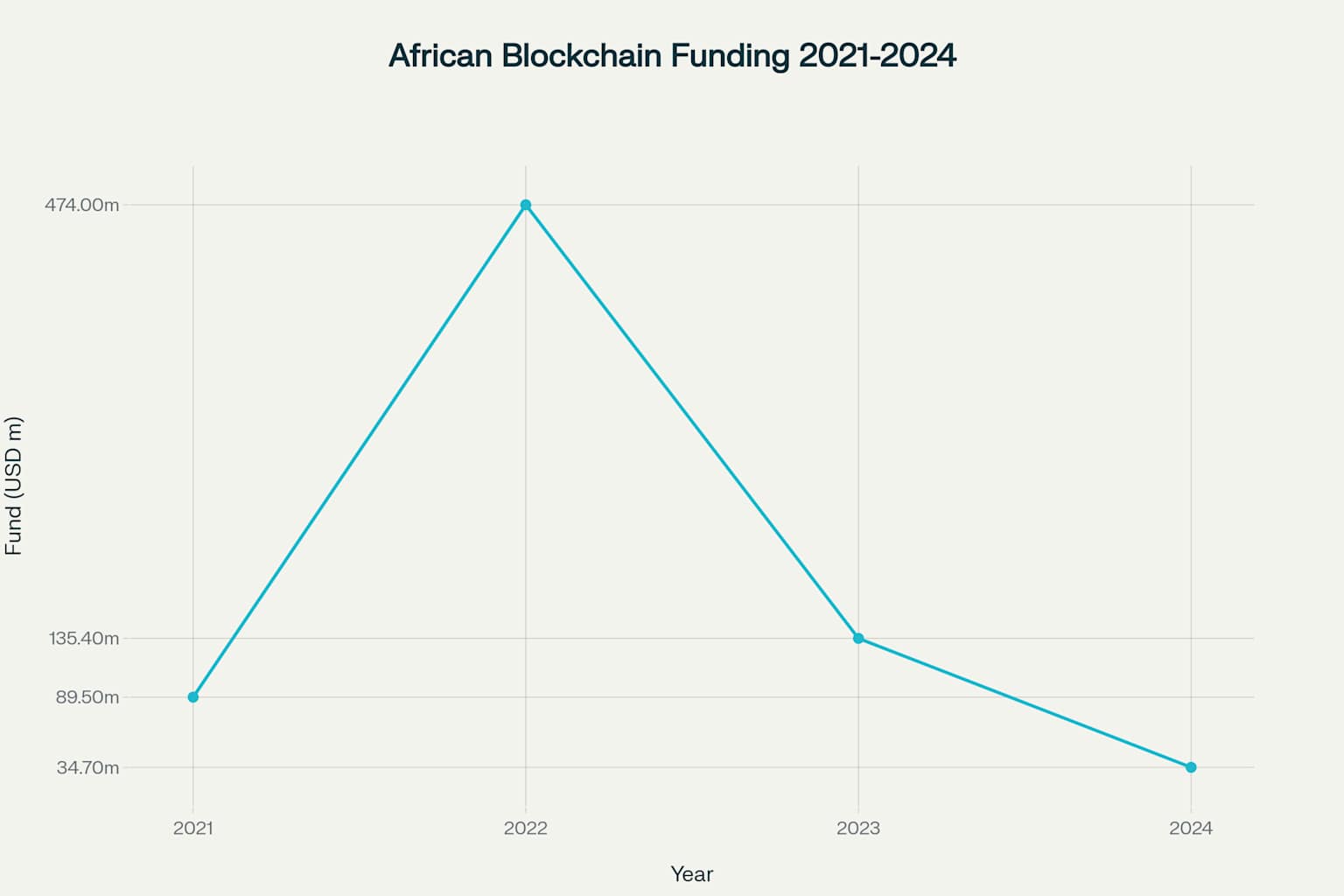
African blockchain funding experienced a dramatic surge in 2022 before declining in subsequent years, reflecting global market conditions and regulatory uncertainty.
Nigeria's Hyperledger-Powered Payment Rails
Zone's blockchain network stands as perhaps the most compelling example of Africa's infrastructure-first blockchain strategy.
Built on Hyperledger Fabric, the platform functions as a decentralised payments switch among financial institutions, enabling direct card routing to issuers and eliminating traditional failure points.
The numbers tell a remarkable story. Zone has facilitated 100 million transactions with an average value of NGN 10,000 per transaction, proving that blockchain can handle the mundane yet critical work of everyday payments.
More significantly, the platform has onboarded twelve banks, though only a few have fully integrated blockchain for ATM transactions, highlighting both the potential and the cautious adoption patterns characteristic of traditional financial institutions.
Zone's expansion with payment terminal service providers Accelerex and ITEX, the platform now enables merchants to process POS payments directly on-chain.
This integration eliminates intermediaries, enables instant settlements, and provides the transaction traceability that blockchain uniquely offers; all while maintaining regulatory compliance through the Central Bank of Nigeria's oversight.
The partnership with Nigeria Inter-Bank Settlement System (NIBSS), the country's central payment switch, marks a watershed moment for blockchain adoption in African financial infrastructure.
This collaboration enables NIBSS to facilitate interactions between POS terminals and customers' banks on a regulated blockchain network - the first time a major African regulator has operated within such a framework at this scale.

Compliance-First Product Design
Unlike the "move fast and break things" mentality that characterised early blockchain ventures, African startups are designing products with regulatory frameworks embedded from inception.
Nigeria's recent signing of the Investments and Securities Act 2025 into law exemplifies this evolving relationship between blockchain innovation and regulatory oversight.
The act officially recognises digital assets as securities under the Nigerian Securities and Exchange Commission's purview, providing legal clarity that enables compliant product development.
South Africa's regulatory sandbox has proven instrumental in fostering this compliance-oriented innovation. The Intergovernmental Fintech Working Group's sandbox has tested blockchain and crypto applications that most African regulators avoid, providing valuable insights that inform regulatory approaches.

With 52 applications and 9 advancing to testing, the sandbox has enabled controlled experimentation that benefits both innovators and regulators.
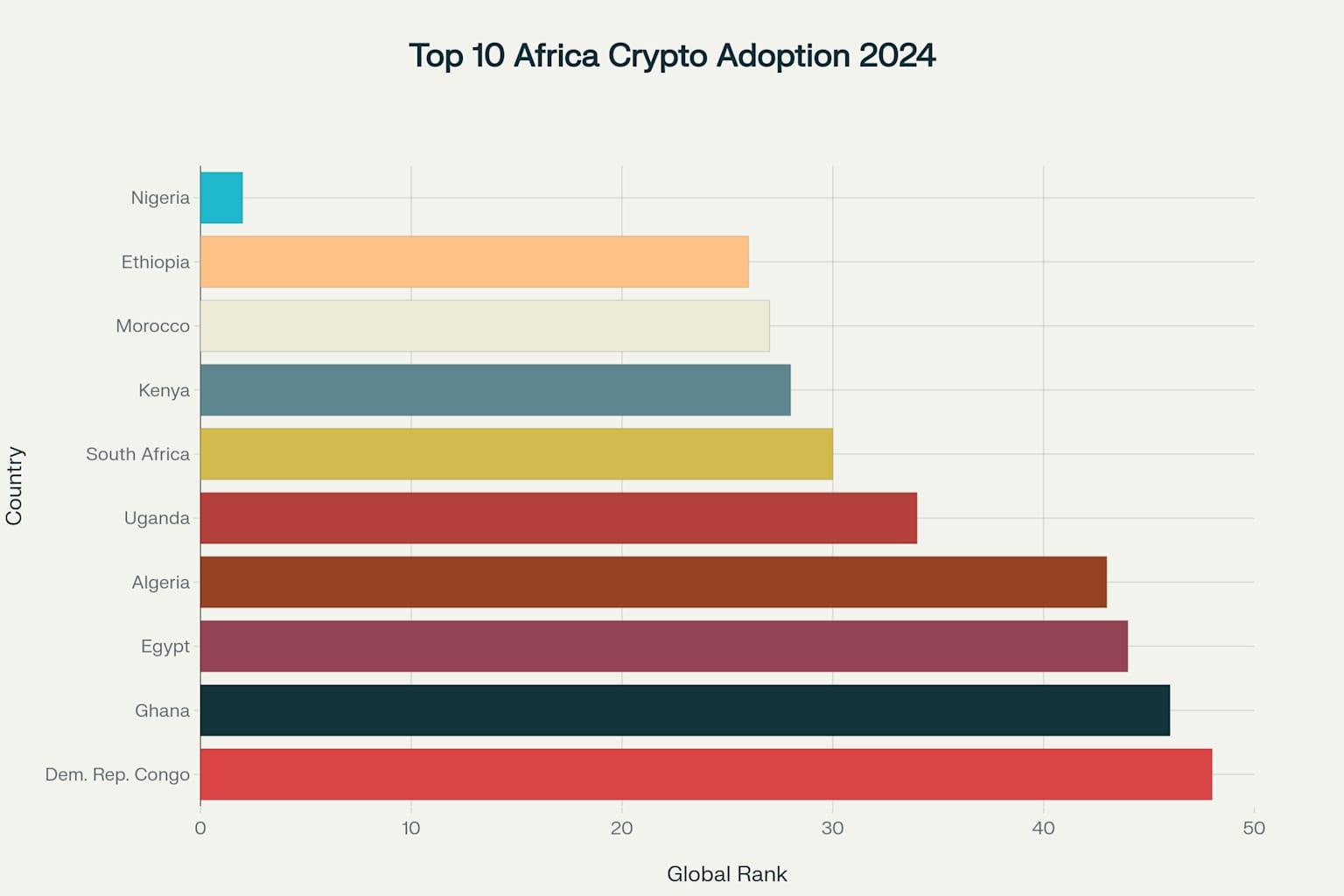
Nigeria leads Africa in cryptocurrency adoption with a global ranking of 2nd, significantly ahead of other African nations in the 2024 Chainalysis index
Market Dynamics and Investment Patterns
The investment landscape reveals a maturing ecosystem increasingly focused on utility over speculation.
While African blockchain funding experienced volatility, surging to $474 million in 2022 before declining to $135.4 million in 2023 and $34.7 million in the first half of 2024, the sector's share of total African venture funding has remained robust.
In H1 2024, blockchain accounted for 6.4% of Africa's total venture funding and 12.5% of all deals, significantly exceeding global averages of 3.5% and 5.9% respectively.
Significantly, Africa's 1.8% share of global blockchain venture capital deals in H1 2024 represents growth from 1.3% in 2023, demonstrating the continent's expanding influence in the global blockchain ecosystem.
The emergence of stablecoins as a dominant force in African crypto transactions underscores this utility focus. Stablecoins accounted for 43% of the region's transaction volume in 2024, compared to just 18% globally.

This preference reflects African users' prioritisation of stability and utility over speculative gains, precisely the mindset that supports infrastructure-focused blockchain deployment.
Regional Expansion and Cross-Border Implications
The success of Nigeria's blockchain payment infrastructure is catalysing similar developments across the continent.
Rwanda's proposed Virtual Assets Law, which positions the country as a hub for virtual asset service providers, demonstrates the competitive dynamics emerging as African nations recognise blockchain's strategic importance.
The law's emphasis on investor protection and market integrity mirrors Nigeria's compliance-first approach while offering more flexible capital requirements to attract smaller startups.
This governmental embrace of blockchain infrastructure creates additional market opportunities for companies developing enterprise blockchain solutions.
The African Continental Free Trade Area (AfCFTA) provides a compelling framework for blockchain-enabled cross-border payments.
Startups like Chipper Cash and MFS Africa are already facilitating inter-African commerce through blockchain-based solutions, while the infrastructure being built by companies like Zone positions them for eventual regional expansion.
The Path Forward: Pragmatism Over Hype
The African blockchain landscape in 2025 represents a fundamental maturation from the speculative excess of previous years toward practical, regulation-compliant infrastructure development.
This pragmatic approach positions African blockchain companies to capture the genuine utility that blockchain technology offers: transparent transaction processing, efficient settlement, reduced intermediation costs, and enhanced security.
As Zone CEO Obi Emetarom noted, "The adoption of blockchain payments by major players signals an industry-wide shift" toward payment reliability, operational efficiency, and regulatory compliance.
The evidence suggests that African blockchain companies are successfully navigating the transition from innovation experiments to essential financial infrastructure.
Their compliance-first, utility-focused approach offers a template for blockchain development that prioritises regulatory legitimacy while capturing the technology's genuine benefits.
As this infrastructure matures and expands across the continent, it may well position Africa as a global leader in practical blockchain implementation:
Proving that the technology's true value lies not in disrupting existing systems, but in making them work better for everyone.
Edited by Annette George


