


- India rescued 540 nationals trafficked into cybercrime rackets in Southeast Asia, where they were forced into online scams under threats of violence.
- The region has become a global hotspot for digital fraud, exploiting foreign workers in scam centers, highlighting a growing international crisis.
- While India warns citizens against fake job offers, stronger regulations, crackdowns on traffickers.
The Indian government’s rescue of 540 nationals from cybercrime rings in Southeast Asia is a stark reminder of the growing menace of organized digital fraud.
These people were trafficked and coerced into online frauds in Myanmar, Thailand, Cambodia, and Laos after being duped by phony job promises. The necessity of a military rescue highlights the inadequacy of international control as well as the barbarism of these operations.
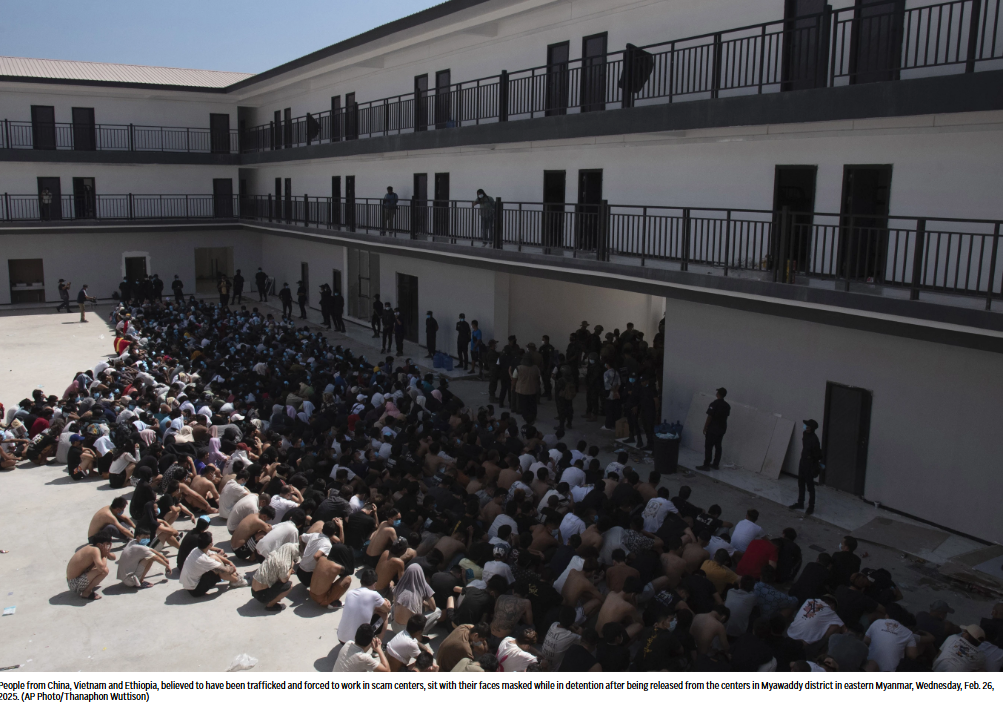
The Golden Triangle, known for being notorious on drug trafficking, has now become a cybercrime hub, where foreign workers are exploited in fraudulent call centers.
This isn’t just an Indian problem - it’s a global crisis.
Countries must collaborate to dismantle these networks and crack down on traffickers operating under the guise of recruiters.
While the government warns citizens to verify job offers, that’s not enough. Stronger regulations, better awareness campaigns, and stricter monitoring of recruitment agencies are extremely crucial.
India’s swift action is commendable, but it must not stop at repatriation, right?
Justice must follow. Without aggressive intervention, these cyber-slavery operations will continue, and more unsuspecting job seekers will fall.
Fall towards being a victim to an industry built on deception and coercion.
Edited by Harshajit Sarmah


